






How to quarantine new aquarium fish safely

Bringing home new fish is exciting, but even healthy-looking arrivals can carry parasites, bacteria, or fungal spores that are not yet visible. A separate quarantine period gives you time to observe and treat newcomers before they join the main aquarium. This simple routine protects established fish, preserves biological stability, and helps you respond calmly if a problem appears.
A quarantine tank protects your established aquarium
Quarantine means keeping new fish in a separate, fully functional aquarium for a defined observation period. The goal is not to isolate fish permanently. It is to prevent a hidden illness from entering a community tank, where treatment can be difficult and stressful for every inhabitant.
Many common aquarium diseases have an incubation period. White spot disease, gill flukes, velvet, fin rot, and internal parasites may not be apparent at the shop or during transport. Fish can also be weakened by shipping stress, poor water conditions, or changes in temperature.
A quarantine tank allows you to monitor each fish closely. You can check its appetite, breathing, posture, colour, waste, and social behaviour without trying to identify one fish among plants, rocks, and tank mates.
Before stocking any aquarium, make sure its filtration is biologically mature. If you are preparing a dedicated tank from scratch, How to cycle a new aquarium safely offers useful guidance on establishing safe water conditions.
Set up a simple and practical quarantine tank
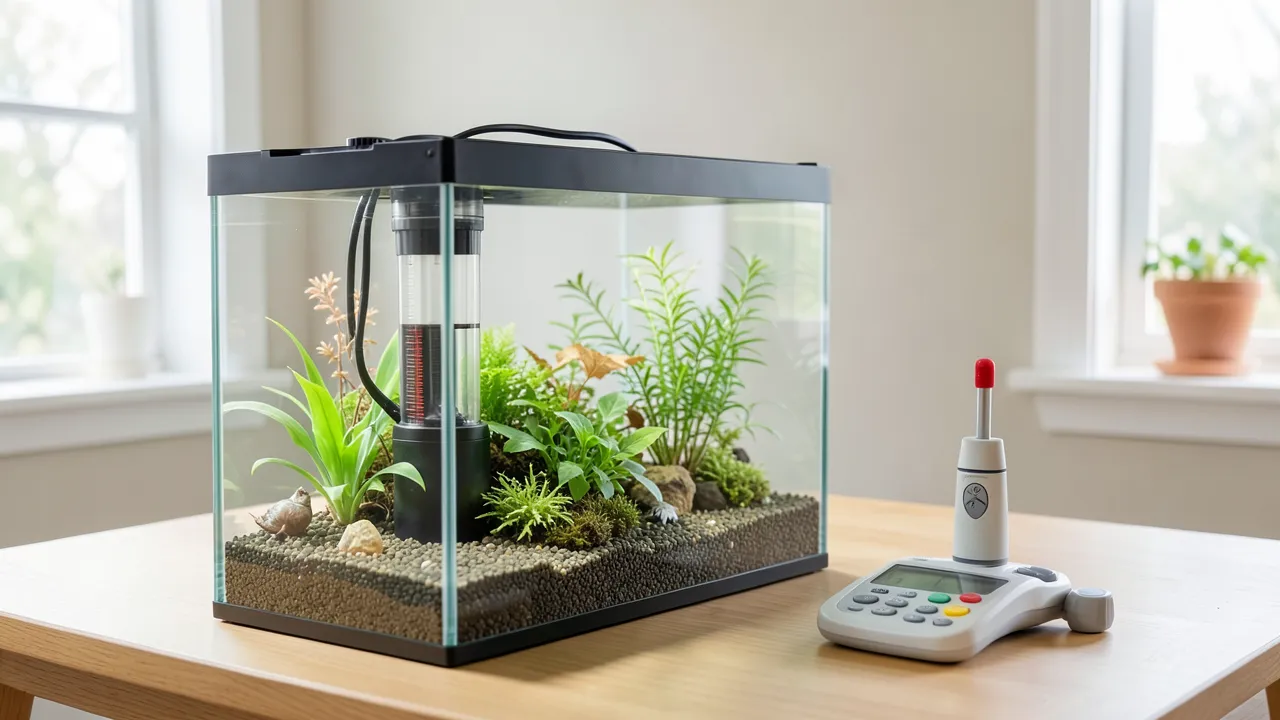
A quarantine aquarium does not need elaborate aquascaping. In fact, a bare and easy-to-clean setup is usually preferable. For small community fish, a tank of around 40 to 60 litres is often suitable. Larger fish need more swimming space and stronger filtration.
Your basic equipment should include:
- A suitably sized aquarium with a secure lid
- A heater and thermometer for tropical species
- A sponge filter or internal filter with gentle flow
- An air pump, especially when using medication
- A light, used sparingly to reduce stress
- A few inert hiding places, such as PVC pipes or plastic caves
- A water test kit and a siphon dedicated to the quarantine tank
Use a mature sponge filter whenever possible. Keeping an extra sponge in the filter of your established aquarium is a convenient way to seed a quarantine tank with beneficial bacteria. However, avoid transferring gravel, ornaments, plants, or filter media back into the main tank after quarantine, since they may carry pathogens.
Keep the bottom bare. This makes waste easy to remove and lets you inspect droppings, which can reveal digestive problems or parasites. Provide hiding places, but avoid porous natural wood or complex decorations that are difficult to disinfect.
Acclimate new fish carefully before isolation
Transport can place fish under considerable stress. Once you arrive home, dim the aquarium lights and float the closed bag in the quarantine tank for 15 to 20 minutes so the temperature can equalise.
Then gradually add small amounts of quarantine water to the bag over the next 20 to 30 minutes. This helps the fish adjust to differences in pH, hardness, and temperature. Use a net to transfer the fish into the tank, and discard the shop water rather than pouring it into your aquarium.
For the first day, leave the lighting low and offer little or no food. On the following day, provide a small amount of a familiar, high-quality food. Overfeeding harms water quality quickly in a lightly stocked quarantine tank, so feed modest portions and remove uneaten food.
Check ammonia and nitrite every day during the first week. Both should remain at zero. A partial water change may be needed if either reading rises. Keep replacement water close to the tank’s temperature and treat it with a reliable dechlorinator.
Observe fish for at least two to four weeks
A quarantine period of at least 14 days may be adequate for fish that arrive energetic, eat well, and show no symptoms. Four weeks offers a greater safety margin, particularly for sensitive species, wild-caught fish, fish from mixed retail systems, or additions to a valuable established aquarium.
During observation, look for:
- Rapid breathing, gasping, or one-sided gill movement
- White spots, gold dusting, excess slime, ulcers, or fuzzy growths
- Clamped fins, flashing against objects, or unusual swimming
- Loss of appetite, swollen abdomen, stringy faeces, or weight loss
- Torn fins that worsen rather than heal
- Lethargy, isolation, or aggression beyond normal species behaviour
Avoid treating fish “just in case” with several medications at once. Unnecessary medication can damage the filter bacteria, reduce oxygen levels, and add stress to already vulnerable fish. If signs of illness occur, identify the likely problem, read the medicine instructions carefully, and treat the quarantine tank only.
Good equipment makes water management less demanding. You can compare practical filtration, heating, and aeration options in Best Equipment for Aquariums & Garden Ponds.
Transfer fish only when they are healthy and stable
When the quarantine period is complete, the fish should be eating reliably, breathing normally, and showing no visible signs of disease. Match the quarantine tank temperature and water parameters closely with the main aquarium before transfer.
Move the fish with a clean net or container, and do not transfer quarantine water into the display tank. Afterward, clean nets, siphons, and buckets used during quarantine with an aquarium-safe disinfectant. Rinse thoroughly and allow equipment to dry before using it again.
A consistent quarantine routine delivers clear benefits:
- It limits the risk of introducing disease to established fish.
- It provides a calm setting for stressed newcomers to recover.
- It allows targeted treatment without medicating the main aquarium.
- It makes daily health checks easier and more accurate.
- It supports healthier long-term stocking decisions.
A safer routine leads to healthier fish
Quarantining new aquarium fish requires a little extra space and patience, but it can prevent major losses later. With clean water, stable temperature, gentle filtration, and daily observation, you give each new arrival the best chance to settle successfully before it joins your aquarium community.