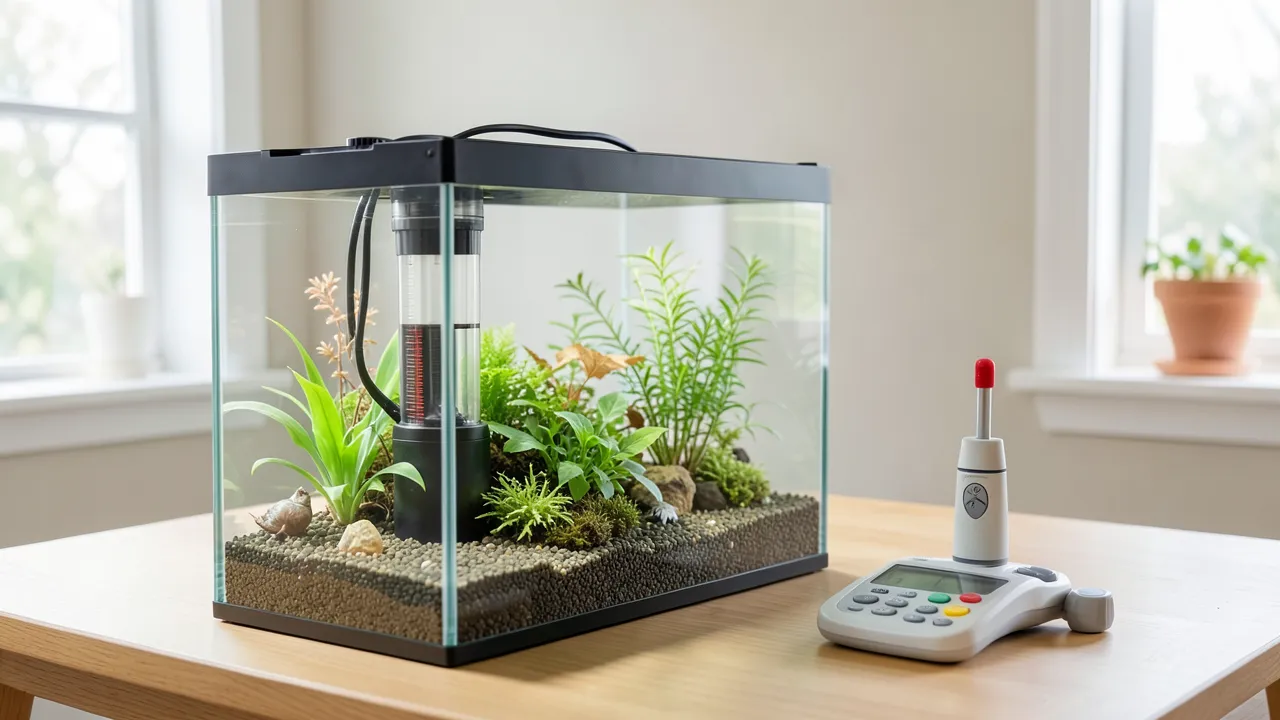







How to position an aquarium safely at home
Choosing the right location for an aquarium protects both your livestock and your home. A filled tank is heavy, sensitive to temperature changes, and vulnerable to accidental knocks. Before adding water, fish, plants, or equipment, assess the room carefully. A safe position gives you reliable access for maintenance while creating a calm, stable environment for aquatic life.
Start with a surface that can support the full weight
An aquarium becomes far heavier than it appears once filled. Water weighs roughly one kilogram per litre, before you account for the glass, substrate, rocks, wood, equipment, and cabinet. A 100-litre aquarium can easily exceed 130 kilograms when fully set up.
Place the tank on a level, purpose-built aquarium stand or on furniture explicitly rated for the intended load. Avoid lightweight shelving, narrow tables, damaged cabinets, or surfaces that flex when pressure is applied. Even a slight tilt can place uneven stress on the glass seams and base panel.
Measure the aquarium and its stand before choosing a site. The entire base must be supported, with no part hanging over an edge. If you are selecting a new tank as well as a location, How to choose the right aquarium size can help you match capacity to your available space and household needs.
For larger aquariums, consider the floor construction. Ground floors with solid concrete foundations generally offer strong support. Upper-floor installations may need more care, particularly in older homes or properties with suspended timber floors. Positioning the aquarium against a load-bearing wall can help distribute weight, though professional advice is sensible for very large installations.
Keep the aquarium away from direct sunlight and heat sources
Natural light can make an aquarium attractive, but direct sunshine often causes problems. Sunlight warms the water quickly, encourages algae growth, and may create uncomfortable temperature swings for fish. A tank positioned beside a bright south-facing window can become difficult to manage during warmer months.
Choose a place with indirect daylight or use curtains and blinds to control strong light. Aquarium lighting should provide the main illumination, allowing you to set a consistent schedule for fish and plants.
Keep the tank away from radiators, fireplaces, portable heaters, air-conditioning units, and kitchen appliances that release heat. Sudden changes in room temperature make the heater work harder and can stress aquatic animals. Similarly, avoid placing an aquarium beside exterior doors, drafty windows, or ventilation grilles.
Maintaining stable water conditions starts with the room itself. For practical guidance on testing and controlling the parameters that affect your livestock, see Water Quality Management for Healthy Aquatic Environments.
Choose a quiet location with enough room for maintenance
Fish benefit from a calm setting, especially species that are easily startled. Avoid placing the aquarium where doors slam, speakers produce strong vibrations, or people regularly brush past the glass. A busy hallway may look convenient, but it raises the risk of knocks and makes routine care less comfortable.
A living room, home office, or dining area can work well when the aquarium is placed slightly away from the main walking route. You should also think about viewing height. The centre of the display should be easy to enjoy while sitting or standing, depending on the room’s purpose.
Leave enough clearance around the aquarium for everyday tasks. You need access to the lid, filter, heater, cables, and rear glass. Space is also needed for water changes, algae cleaning, feeding, and replacing equipment. A tank pushed tightly into a corner may look neat at first, but maintenance soon becomes frustrating.
Plan the decorative setting after safety and access have been addressed. Enhance Your Aquarium and Terrarium with Creative Decor offers ideas for making the aquarium feel integrated with your interior without crowding the area around it.
Plan power and water access before installation
Aquariums require electricity for filters, heaters, lights, air pumps, and sometimes automatic feeders. Position the tank near a suitable wall socket, but do not place it directly beneath one. Water can splash during maintenance, and condensation may affect poorly positioned electrical points.
Use a drip loop on every cable. This means each cable should dip below the socket before rising to connect, so any water running along it falls to the floor instead of reaching the plug. Use high-quality surge-protected extensions only where needed, and keep connections dry and accessible.
Avoid running cables across walkways, under rugs, or near areas where pets may chew them. Label plugs when several devices are connected, as this makes maintenance safer and prevents accidental disconnection of a filter or heater.
Water access also matters. Carrying buckets across several rooms increases the chance of spills. A nearby sink is convenient, but do not compromise the aquarium’s safe position merely to be closer to a tap. Keep towels, a bucket, and basic water-treatment supplies close to the tank in a dedicated storage space.
Reliable equipment supports a safer setup from day one. You can compare useful options in Best Equipment for Aquariums & Garden Ponds, including filtration, heating, and maintenance essentials.
Protect the aquarium from children, pets, and household accidents
A secure aquarium position considers every member of the household. Keep the tank away from play areas, climbing furniture, and places where pets jump or run. Cats may be drawn to moving fish, while dogs can knock into unstable stands during excited moments.
Use a fitted lid where appropriate. It reduces evaporation, prevents fish from jumping out, and limits the chance of objects entering the water. Store fish food, treatments, and cleaning products out of reach of children and away from food preparation areas.
Before filling the aquarium, check these practical points:
- The stand is level and rated for the aquarium’s filled weight.
- The tank is away from direct sun, radiators, and drafts.
- There is clear access to the filter, lid, and rear connections.
- Electrical cables include drip loops and remain dry.
- The aquarium is outside busy routes and away from unstable furniture.
- Cleaning supplies can be stored nearby for quick response to spills.
A well-positioned aquarium supports a safer home display
The best aquarium location balances strength, stability, access, and visual appeal. A carefully chosen position reduces maintenance difficulties, protects your flooring and electrical equipment, and helps fish experience a more predictable environment. Take time to assess the room before filling the tank, because moving a mature aquarium is far more demanding than positioning an empty one.