How to reduce aquarium noise at home
Aquariums bring movement, colour and a calming focal point to a home, but unwanted humming, rattling or splashing can quickly disturb a quiet room. Most aquarium noise comes from equipment rather than the fish tank itself. By locating the source and making a few practical adjustments, you can create a more peaceful setup without compromising water quality or filtration.
Start by identifying the type of sound you hear
Before replacing equipment, listen carefully to when and where the noise occurs. A steady low hum usually comes from a filter, air pump or lighting unit. Intermittent clicking may indicate a loose impeller, while a splashing sound often comes from a return outlet positioned too high above the water.
Place your hand gently on the aquarium cabinet, filter housing and nearby tubing while the equipment is running. Vibrations can travel through furniture, walls and floors, making a small sound seem much louder than it really is.
Common sources include:
- External or internal filter motors
- Air pumps and air stones
- Water returning from a filter outlet
- Vibrating lids, pipes or ornaments
- Uneven aquarium stands
- Cooling fans or aquarium lights
Turning off one device at a time for a few seconds can help you isolate the source. Keep the filter switched off only briefly, particularly in a well-stocked aquarium, so beneficial bacteria and water circulation are not disrupted.
A stable aquarium base can reduce vibrations
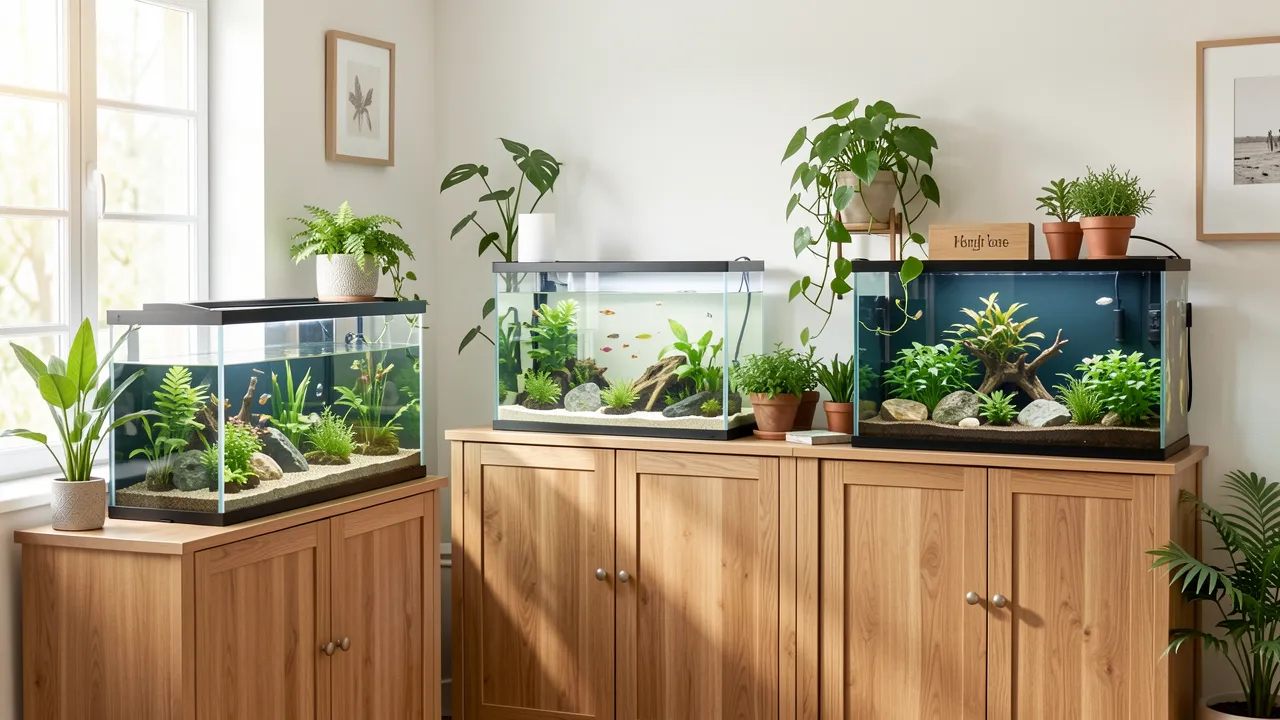
A tank placed directly on a hard cabinet surface can transfer motor vibrations into the furniture. The cabinet may then act like a speaker, amplifying a faint hum across the room. A suitable foam mat or purpose-made aquarium mat between the tank and stand can reduce this transfer, provided it is compatible with your aquarium manufacturer’s guidance.
Check that the cabinet is level from side to side and front to back. An uneven stand can place strain on the glass and create rattling as water movement shifts the tank slightly. Tighten any loose cabinet doors, handles or shelves, as these can vibrate when pumps are running.
Tank size also affects how sound travels. A larger volume of water can soften some splashing sounds, while a poorly matched filter may be noisier than necessary. If you are planning a new setup, How to choose the right aquarium size can help you match the tank to your space and intended livestock.
Maintain filters to keep the motor running quietly
Filters become louder when debris accumulates around the impeller, the small rotating part that drives water through the system. Sand, plant matter and hardened mineral deposits can cause clicking, grinding or an irregular buzz.
Switch off and unplug the filter before cleaning it. Remove the impeller according to the manufacturer’s instructions, then rinse the chamber and impeller carefully in aquarium water or dechlorinated water. Avoid using soap or household cleaners. Inspect the impeller shaft and rubber end caps for wear, cracks or distortion. A damaged part can make persistent noise even after cleaning.
External filters may also become noisy when air is trapped inside the canister. Check that hoses are securely attached, free from sharp bends and fully primed. Small air leaks around connectors can produce a repeated gurgling sound.
For a quieter result, choose equipment that suits the volume and stocking level of your aquarium. The guide to Best Equipment for Aquariums & Garden Ponds offers useful considerations when comparing filters, pumps and supporting accessories.
Position filter outlets below the water surface
Waterfall noise is often the simplest problem to fix. If the filter outlet sits well above the water line, returning water can splash loudly against the surface and tank walls. Raise the water level to the recommended mark, or lower and angle the outlet so it creates gentle surface movement without a strong drop.
Some surface agitation is beneficial because it supports gas exchange. The aim is not to remove movement completely, but to avoid unnecessary splashing. A spray bar positioned just under the surface can provide circulation with less noise than a concentrated outlet stream.
Place air pumps on a soft, secure surface
Air pumps naturally create vibration because of their internal diaphragm. When placed directly on a cabinet, shelf or floor, the vibration can become a noticeable buzzing sound.
Set the pump on a folded towel, dense foam pad or rubber anti-vibration mat. Make sure it remains dry and stable, with sufficient ventilation around the unit. Do not wrap the pump tightly or block its air intake.
Keep the airline tubing free from kinks and prevent it from knocking against the aquarium glass. A check valve is also useful when the pump is located below the water level, as it helps prevent back-siphoning during a power cut.
If bubbling is too loud, use a larger air stone that produces finer bubbles, reduce the pump output if it has an adjustment control, or install an air control valve. You can also place the air stone deeper in the tank, which often makes the surface disturbance less pronounced.
Quiet habits protect both your aquarium and your home
Noise reduction should not mean restricting filtration or oxygenation beyond what your fish require. A silent aquarium with poor circulation can lead to unhealthy water conditions. Instead, focus on stopping vibration, trapped air, loose components and excessive splashing.
Keep these points in mind:
- Clean the filter impeller regularly to prevent grinding and clicking.
- Use a level, sturdy cabinet with an appropriate mat beneath the aquarium.
- Keep water returns close to or just below the surface.
- Place air pumps on vibration-absorbing material.
- Secure tubing, lids and decorations that may rattle.
- Replace worn impellers, shafts and rubber fittings rather than tolerating ongoing noise.
Create a quieter aquarium space for everyday enjoyment
A peaceful aquarium is usually the result of routine care rather than expensive upgrades. Once you have identified the source of the sound, small changes to placement, maintenance and water flow can make a noticeable difference. With a stable tank, clean filter and thoughtfully positioned equipment, you can enjoy the visual calm of your aquarium without an unwanted mechanical soundtrack.